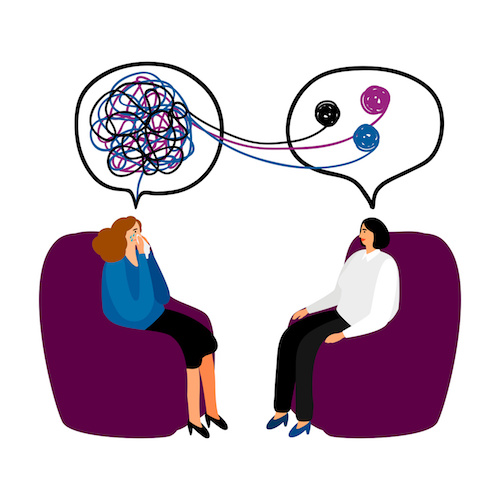
Over the last several weeks, I’ve had several friends reach out about how these uncertain times have been mentally exhausting. Many want to reach out and start therapy, but often are overwhelmed with how to go about it, or don’t have enough information to follow through. Thus, it’s easy to end up in a never-ending loop of having a mental crisis – wanting to seek therapy – having difficulty in finding a therapist, – having another mental crisis. Here are some ways to approach therapy, whether it’s your first time doing so or not.
To co-pay or not to co-pay, that is the question
Affordability comes up often when people are first contemplating on getting therapy. There is a lot of overlap and a lot of confusion on what options are available to whom, and how much that will end up costing out of pocket. First, if you currently have health insurance, your plan may cover you for mental wellness/therapy appointments in part or fully. This is something you will have to check directly with your insurance carrier. If your carrier does offer coverage, or reimbursement, you can ask to see a directory of available therapists they work with as to minimize the paperwork on your end, and have it so the therapist can handle all the billing info for you.
If you do not have insurance, or prefer to utilize therapy outside your insurance carrier, many (if not most) therapists will accept direct payment. Payment for therapy really depends on a lot of factors (for example, a licensed psychologist will probably charge a higher fee than a therapist with a Marriage, Family, Therapist certificate). Neither is better or worse than the other. If you are financially struggling, some therapists will offer a sliding-scale fee, based on what you can reasonably afford. This is not guaranteed, however, and you should check with the individual provider or organization.
A dating game
I’ve told people that finding the right therapist almost feels like dating. You may find people that on paper totally fit what you’re looking for, but when you meet them you may find you’re not really on the same page and it just doesn’t feel right. If it doesn’t feel right, you don’t have to force it. Many therapists will offer a free 15 minute phone consultation to see if you would be a good fit for each other prior to meeting. Feel free to use this time to ask them any questions about payment, style of therapy, expectations you have, etc. This is YOUR health on the line, so don’t feel bad about asking questions to make sure you are finding someone who can best fit your needs! I personally have had at least 4 different therapists over the course of 5 years. It’s okay to be picky and choosy. It’s more than okay.
Of course with dating, comes break-ups! The first time you decided to “break up” with your therapist, you might find yourself feeling guilty or worried. There’s nothing to feel bad about. If your therapist is a decent person they want you to get the best help possible, even if that means losing you as a client and referring you to someone else. Be open and honest about ending things. You don’t have to give every detail as to why you don’t want to continue with your current therapist, but you might find that by sharing what it is you’re actually looking for, your therapist can help you find someone else who will fit those needs. Just as you would want to feel completely at ease by a surgeon who has the job of operating on your heart, you would want to be completely at ease with a therapist who will be helping you with your mental health.
The new normal
Gone are the days where seeing a therapist is something you keep hush-hush (at least, that’s how it should be). There is nothing wrong or weird about seeing a therapist. I’m not a professional licensed mental health provider, but I do feel that nearly any person can benefit from therapy at some point in their lives. You don’t have to have a traumatic past, you don’t have to have depression or anxiety, you don’t have to have intense life-changing phobias. Even if it’s just dealing with new situations coming up in life, such as big milestones, career changes, lifestyle changes, moving to a new city, or feeling isolated, you can probably benefit from therapy. It is more than okay to talk about it freely and openly with others to the best of your comfort. You don’t have to overshare what you’re going to therapy for or even what you’re learning in your sessions, but sometimes just merely saying to a friend ‘I go to therapy’ can help us all feel less stigmatized about it. Seeing a therapist is as normal as going to your family doctor for a check-up.
It’s a marathon, not a sprint
Unlike a lot of acute physical conditions that would require you to see a doctor, going to therapy is not going to “fix” things or result in any meaningful changes overnight. In fact, you might even notice that you will feel mentally or emotionally worse in the beginning. This can be attributed to allowing yourself to be deeply honest and communicate feelings about certain things that you may have not talked about before. Don’t despair if at first it all feels like too much. Be honest with your therapist if things are moving too fast, or if you need to focus on different goals. You and your therapist should work together to come up with a game plan, as all individuals use therapy for different reasons. If from the get-go you know your therapist isn’t the one, don’t hesitate on finding someone new. If you want to keep working with your therapist but aren’t comfortable with his/her methods, let them know! Your therapist wants to make sure they are doing everything they can to help you. Eventually, the more time, effort, and consistency you put towards maintaining proper mental well-being, the more you may notice a difference in your thought patterns and behaviors. Of course, just because you start therapy doesn’t mean you have to see a therapist for the rest of your life (and if you do, there’s nothing wrong with that, either!) Therapy is exactly what you make of it. Some will benefit from weekly sessions for a year, and then cutting back to monthly or “as needed”. Some will benefit from having a session only when a major life change happens. Either way, don’t feel ashamed when it comes to therapy; be proud that you are taking the steps you need to take care of yourself.
What has been your experience (including negative ones) with therapy or finding the right therapist? Leave a comment below!
 Gauri's Quiet Corner