Why the US needs a single payer health care system

As we near 5 months into this on-going pandemic, COVID-19 has truly exposed the cracks in the foundation of many of our infrastructures, especially our health care system in the US. Now more than ever you may be hearing for more calls for single payer health care, or the catch all phrase “Medicare-4-All”. So what is a single payer health care system? What does it look like in other countries, and why has it not been implemented in the US?

Single payer health care, very plainly, is having one public agency in charge of providing health care coverage to all its citizens. This eliminates the issues that arise in our health care system with billing, insurance, deductibles, and the astronomical administrative costs we see with our current health care system. Although several countries have a single payer system (South Korea, Canada, the UK, etc), it can look different in each place. For example, Canada’s single payer system covers all hospital and doctor visits, but does not include dental or vision. In South Korea, the single payer system is funded both through public and private means. Finally, the UK has the National Health Service, which lets the government provide health care to its citizens, while also employing doctors and hospitals.

So this sounds pretty great…why aren’t we doing this in the US already?

Source: sanders.senate.gov

To put it quite plainly again, it all comes down to politics. The health care industry has become extremely politicized in the US, where a person’s coverage is usually tied to their place of employment. Because of the competitive nature of our health care system, this creates many moving parts with hundreds of different insurance companies offering (and lacking) many services. The biggest players, including pharmaceutical companies and insurance agencies, have immense lobbying power, thus making it very difficult to transition away from the current system. This sort of piece-meal way of offering health care is partially why Americans end up paying so much out of pocket, compared to other developed nations. A recent study found that of Americans who filed for bankruptcy in 2018, ~66% of bankruptcies were related to medical problems.

What would a single payer health care system actually look like in the US?

Ideally, having a single payer system here would allow much of our health care initiatives to be financed towards preventative public health causes, such as funding programs to prevent diabetes or heart disease very early on. The US spends more than any other developed nation on health care, yet does not provide universal coverage. With a single payer system, not only would the costs be reduced, but we would ensure a much healthier nation. The healthier we are, the more productive we will be, thus making room for more economic growth (and, of course, less people dying unnecessarily as they will no longer have to be denied coverage). Researchers from UCSF found that a single payer system would save us in costs, even in the long-run.

The researchers were able to estimate longer-term savings by using cost projections made in 10 of the models, which looked as far as 11 years into the future. These studies assumed that savings would grow over time, as the increases in healthcare utilization by the newly insured leveled off, and the global budgets adopted by single-payer systems helped to constrain costs. By the 10th year, all modeled single payer systems would save money, even those that projected costs would initially increase.

https://www.ucsf.edu/news/2020/01/416416/single-payer-systems-likely-save-money-us-analysis-finds

So as COVID-19 continues to plague our health care system, we must seriously consider alternative options to how we provide health care to begin with. No one should have to declare bankruptcy or die because they are not able to afford health care in the wealthiest nation in the world. By pushing our elected officials to vote in favor of a single payer system, the US may one day become a healthier nation where health care is seen as a civil right, and not as a privilege for the wealthy.

What are your thoughts on the US health care system and/or single payer health care? Leave a comment below!
Therapy for Newbies

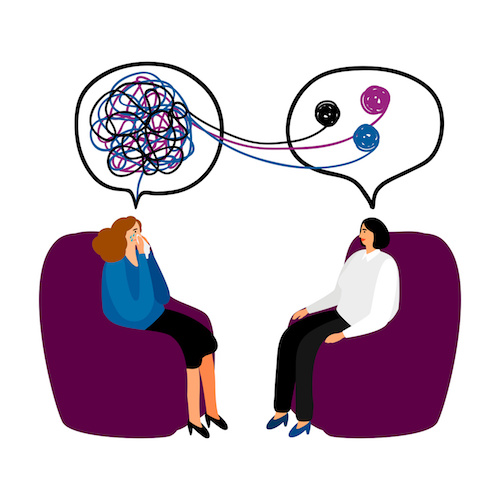
Over the last several weeks, I’ve had several friends reach out about how these uncertain times have been mentally exhausting. Many want to reach out and start therapy, but often are overwhelmed with how to go about it, or don’t have enough information to follow through. Thus, it’s easy to end up in a never-ending loop of having a mental crisis – wanting to seek therapy – having difficulty in finding a therapist, – having another mental crisis. Here are some ways to approach therapy, whether it’s your first time doing so or not.

To co-pay or not to co-pay, that is the question

Affordability comes up often when people are first contemplating on getting therapy. There is a lot of overlap and a lot of confusion on what options are available to whom, and how much that will end up costing out of pocket. First, if you currently have health insurance, your plan may cover you for mental wellness/therapy appointments in part or fully. This is something you will have to check directly with your insurance carrier. If your carrier does offer coverage, or reimbursement, you can ask to see a directory of available therapists they work with as to minimize the paperwork on your end, and have it so the therapist can handle all the billing info for you.

If you do not have insurance, or prefer to utilize therapy outside your insurance carrier, many (if not most) therapists will accept direct payment. Payment for therapy really depends on a lot of factors (for example, a licensed psychologist will probably charge a higher fee than a therapist with a Marriage, Family, Therapist certificate). Neither is better or worse than the other. If you are financially struggling, some therapists will offer a sliding-scale fee, based on what you can reasonably afford. This is not guaranteed, however, and you should check with the individual provider or organization.

A dating game

I’ve told people that finding the right therapist almost feels like dating. You may find people that on paper totally fit what you’re looking for, but when you meet them you may find you’re not really on the same page and it just doesn’t feel right. If it doesn’t feel right, you don’t have to force it. Many therapists will offer a free 15 minute phone consultation to see if you would be a good fit for each other prior to meeting. Feel free to use this time to ask them any questions about payment, style of therapy, expectations you have, etc. This is YOUR health on the line, so don’t feel bad about asking questions to make sure you are finding someone who can best fit your needs! I personally have had at least 4 different therapists over the course of 5 years. It’s okay to be picky and choosy. It’s more than okay.

Of course with dating, comes break-ups! The first time you decided to “break up” with your therapist, you might find yourself feeling guilty or worried. There’s nothing to feel bad about. If your therapist is a decent person they want you to get the best help possible, even if that means losing you as a client and referring you to someone else. Be open and honest about ending things. You don’t have to give every detail as to why you don’t want to continue with your current therapist, but you might find that by sharing what it is you’re actually looking for, your therapist can help you find someone else who will fit those needs. Just as you would want to feel completely at ease by a surgeon who has the job of operating on your heart, you would want to be completely at ease with a therapist who will be helping you with your mental health.

The new normal

Gone are the days where seeing a therapist is something you keep hush-hush (at least, that’s how it should be). There is nothing wrong or weird about seeing a therapist. I’m not a professional licensed mental health provider, but I do feel that nearly any person can benefit from therapy at some point in their lives. You don’t have to have a traumatic past, you don’t have to have depression or anxiety, you don’t have to have intense life-changing phobias. Even if it’s just dealing with new situations coming up in life, such as big milestones, career changes, lifestyle changes, moving to a new city, or feeling isolated, you can probably benefit from therapy. It is more than okay to talk about it freely and openly with others to the best of your comfort. You don’t have to overshare what you’re going to therapy for or even what you’re learning in your sessions, but sometimes just merely saying to a friend ‘I go to therapy’ can help us all feel less stigmatized about it. Seeing a therapist is as normal as going to your family doctor for a check-up.

It’s a marathon, not a sprint

Unlike a lot of acute physical conditions that would require you to see a doctor, going to therapy is not going to “fix” things or result in any meaningful changes overnight. In fact, you might even notice that you will feel mentally or emotionally worse in the beginning. This can be attributed to allowing yourself to be deeply honest and communicate feelings about certain things that you may have not talked about before. Don’t despair if at first it all feels like too much. Be honest with your therapist if things are moving too fast, or if you need to focus on different goals. You and your therapist should work together to come up with a game plan, as all individuals use therapy for different reasons. If from the get-go you know your therapist isn’t the one, don’t hesitate on finding someone new. If you want to keep working with your therapist but aren’t comfortable with his/her methods, let them know! Your therapist wants to make sure they are doing everything they can to help you. Eventually, the more time, effort, and consistency you put towards maintaining proper mental well-being, the more you may notice a difference in your thought patterns and behaviors. Of course, just because you start therapy doesn’t mean you have to see a therapist for the rest of your life (and if you do, there’s nothing wrong with that, either!) Therapy is exactly what you make of it. Some will benefit from weekly sessions for a year, and then cutting back to monthly or “as needed”. Some will benefit from having a session only when a major life change happens. Either way, don’t feel ashamed when it comes to therapy; be proud that you are taking the steps you need to take care of yourself.

What has been your experience (including negative ones) with therapy or finding the right therapist? Leave a comment below!

Social distancing and mental wellness

Source: Porchlink

As the Coronavirus pandemic continues to change our social landscape, I wanted to write about ways we can follow health experts to keep ourselves and communities safe, while making sure we are looking out for our mental well-being. I hope you all are practicing social distancing, in any way you possibly can. Social distancing not only reduces your risk of contracting the virus, but it also reduces the risk of you spreading the virus to people who are immunocompromised. With social distancing, however, can come feelings of isolation, loneliness, anxiety, and depression. Especially for those who are predisposed to anxiety and depression or other mental health issues, it is so important to make sure you are following best health practices, while taking care of your mental well-being. Here are some ways you can do exactly that!

1. Get out in nature

The novel Coronavirus has led to a complete shut down of many towns, some places closing all businesses that are not essential. This is to encourage residents to stay home as often as possible and only go out for essential needs, such as groceries or pharmacies. However, if your neighborhood allows for this, you can always take a step outside for fresh air or a brisk walk. Now that spring time is officially here in the US, it’s a great opportunity to make sure you are getting out of the house (as long as it is safe for you to do so, and you are not sick). Just make sure to maintain a physical distance of 6 feet from others!

2. Virtual friend hangouts

We are so lucky to live in a time where technology keeps us socially connected more than ever. The other day I had a video chat with a group of friends, and I instantly felt more energized and connected being able to socialize. There are tons of platforms to use including FaceTime, Facebook messenger, or Zoom.

3. Learn a new language or pick up a new hobby

Have you been wanting to learn a new language and been putting it off? I know so many people who use DuoLingo but get so busy with other things that they stop using it (myself included). Being at home more means more time to focus on activities or tasks you may have put off in the past. Some fun indoor activities can include art/drawing, knitting, musical instruments, and even video games.

4. Keep a routine

As we start to adjust to this new normal of working from home, and being at home more than ever, it will be easy to slip out of routines and not put as much effort in taking care of ourselves or our personal space. While it might feel easier, I promise you will actually feel a lot better if you keep a simple routine each day – change into work clothes/day clothes, (even if you aren’t going out), do some exercises at home, eat a balanced healthy breakfast each morning, and maybe even throw some yoga stretches in there to get your blood flowing.

5. Reach out to loved ones

This is a hard time for all of us, but it’s something we are all going through together. It won’t be easy, and for those who are predisposed to depression and anxiety this may be a very challenging time. In social distancing or quarantine, do make sure you reach out to loved ones, and let them know if you are struggling. You don’t have to go through this change alone.

How are you dealing with social distancing in the time of the Coronavirus? What have been your favorite activities to do at home? Share in the comments below!

Slowing the spread of infectious disease: what is “herd immunity” and why does it matter?

Centers for Disease Control and Prevention (CDC)

When you are vaccinated against an infectious disease (for example, the flu, or measles) you are not only reducing your own risk of contracting the disease, you are protecting your whole community. Most of us are able to get vaccinated against certain diseases, but for those who are immunocompromised, or otherwise unable to be safely vaccinated, herd immunity is crucial. The concept of herd immunity is simple – most, if not all, of the healthy population gets vaccinated against a disease, making it more difficult for those germs to be spread. This makes it less likely for the community to get the disease.

Herd immunity is most beneficial for those in the community who are unable to be vaccinated, so there is a decreased risk for them to contract the disease. The hope is, over time with more people being vaccinated, the disease becomes so rare that the risk is far less severe, or wiped out totally. This is particularly true for diseases like the measles in the US (until a recent surge in new cases occurred due to anti-vaccination movements). For diseases like the flu, vaccinations and herd immunity are also vital, even though there are many new strains evolving. That’s why it’s especially important to get the flu vaccine every year, to increase the chance of protection from each year’s flu strain.

To better visualize how positively impactful herd immunity can be for the community, check the graphic from the National Institute of Allergy and Infectious Disease below:

As of recently, the biggest talking point in the news about infectious disease is about the coronavirus, or COVID-19. While there is no vaccine available against COVID-19 at the moment, it’s important to keep in mind that we should be making priority to keep our other vaccinations up-to-date. This way, we are not only protecting ourselves and our community from other infectious diseases, we are also taking a burden off our healthcare system and keeping urgent cares and clinics available for those who may have COVID-19. In the meantime, while we wait to see how the response to COVID-19 develops, make sure to follow the advice of health experts such as CDC and WHO (World Health Organization) on how to best protect yourself!

What are your thoughts on this newly emerging infectious outbreak or vaccines/herd immunity? Share in the comments below!

What social anxiety can look like and how to manage it

Sharp Health News

1. Meeting new people

Meeting new people or making new friends can feel like a burden when one has social anxiety. One way to manage this is to take the pressure off yourself and go into the situation with lots of patience. Even if you end up feeling uncomfortable, remember it’s all temporary.

2. Being around strangers in public

The fear of being judged by people in public can prevent some from enjoying themselves to the fullest, if they are too distracted by what others might be thinking of them. Remember that most people are probably focusing on themselves and too self absorbed to be caring about what you’re doing!

3. Ordering food at a restaurant you’ve never been to

Some people might avoid ordering different things or trying out new places because their social anxiety convinces them that change is scary and being out of the comfort zone isn’t worth it. Keep in mind that the cashier or waiter is just another person, who is not going to be judging or caring about what you’re ordering, how you’re ordering, or what you look like. Just be polite!

4. Canceling plans last minute

Often, people with social anxiety might cancel plans at the last minute, not because they are rude or a bad friend, but because their anxiety has managed to scare and worry them to the point where not leaving the house feels like the best and safest option. This is a tough one to deal with because you don’t want to force yourself to do something or go out if you feel unsafe, but you also don’t want to keep avoiding new or anxiety inducing situations by constantly canceling either. In this case, try to be honest with whomever you are canceling on – let them know you are struggling (you don’t have to share everything) and more often than not the person will be much more understanding.

Tips on managing social anxiety

  • Be honest with your healthcare professional; getting a proper diagnosis is the best first step to managing social anxiety
  • Consider therapy and/or medication
  • Engage in physical activity; exercise gets the heart pumping and the endorphins rushing, which certainly helps with our mental well-being
  • Start small – don’t expect to make drastic changes overnight. Try saying hello to one new person, and go from there.
  • Focus on the positive ‘what-ifs’. We have a tendency to think ‘what if….?’ and assuming the worst. Try flipping the script and thinking what if something positive happens? See how it changes your mindset gradually.

Have you experienced social anxiety? If so how did you manage it? Share in the comments below!

The pros and cons of telemedicine

Risk Management

Over the last decade, especially in the last few years, technological advances have helped health care providers deliver care to patients who may not otherwise have access to it. However, this poses questions about the validity of telemedicine, compared to “standard care”, and whether or not this may be the future of health care – will telemedicine eventually replace in-person visits? Will it only be used when traditional care is not possible? Here I’ve compiled the pros and cons of this latest healthcare trend:

PRO: Accessibility

Having telemedicine makes health care more accessible for people who may otherwise struggle, such as rural populations, or those with physical disabilities.

CON: Not in-person

While a great option for many, telemedicine or virtual health lacks the in-person perk a standard medical appointment would offer.

PRO: One stop shop

Using telemedicine means using some kind of patient portal or hub, which can make it easier to manage different health care providers under one system.

CON: Data and Privacy

While technology does make some things easier, there is always a risk that relying only on telemedicine could potentially compromise patient health information, for example, if there were major data breaches in the video software used for telemedicine.

PRO: Helps smaller hospitals

Telemedicine can help smaller hospitals and clinics transfer critical care they may not be equipped to handle over to specialists thousands of miles away, quicker than ever.

CON: Miscommunication

Relying on the internet may result in spotty connections with video chats, leading to miscommunication, wrong diagnoses, and/or incorrect prescriptions.

PRO: Reduced wait time

The flexibility of making a virtual appointment can help a patient be seen sooner, as well as decrease the burden of overbooked in-person appointments at clinics

Thinkstock

These are all points to consider as we start to witness this on-going transformation to a more digital era in our health care. What has been your experience with telemedicine, and do you think it’s better, worse, or the same as standard care? Leave your comments below!

TMJ disorder: Living with an invisible chronic illness

spooniestickers/Redbubble

I first learned about TMJ disorder when I was newly-moved to Los Angeles, facing levels of traffic and commute hours I hadn’t ever imagined living on the east coast! Being a graduate student while navigating one of the biggest cities I’d ever been to of course brought on some nerves and stress, which had led to a habit of clenching my jaw without realizing.

What I thought was the beginning of a deep cavity in my tooth, ended up being nerve and muscular pain from having clenched my jaw while sitting in traffic every morning for the past several weeks. After seeing a dentist, urgent care, and a primary care doctor, all who seemed sure I wasn’t in that much pain, I’d been advised to take Ibuprofen, drink lots of water, eat soft foods, and do some jaw stretches. After the second straight week of pain with no improvement, I was starting to feel miserable. I went back to the dentist and that is when he confirmed a suspicion of TMJ disorder.

OK, so what exactly is TMJ disorder?

The temporomandibular joint connects the skull bone to your jaw, with a disc acting as a hinge. When excessive clenching or grinding occur, it can lead to the disc sliding out of place, or the jaw becoming inflamed and difficult to open or close. Although considered an acute disorder, it can lead to many flare-ups, bringing with it chronic pain.

Because it is often considered to be a temporary condition, surgery is almost never considered for TMJ disorder. My dentist suggested I be fitted for a custom mouth guard as I was likely clenching my jaw in my sleep. However, I soon realized that was not what was happening, and the mouth guard ended up making my mouth hurt even more. I tried cutting out caffeine as I found that would make my jaw muscle constrict. However, every TMJ disorder flare-up would lead to a migraine. With a history of migraines, caffeine was the one thing that normally made my migraines go away. It soon became a cycle of TMJ flare up – Migraine – Caffeine to treat migraine – No Migraine – worse TMJ pain.

My prognosis

After several more visits to different doctors, I decided to try a more holistic approach and sought out a OMM (Osteopathic Manipulative Medicine) specialist. OMM uses a hands-on approach to manipulate the muscles, fascia, and bones of the body to reduce pain and inflammation. Ultimately, I did find myself feeling much better after two sessions (each one was about 90 mins long), but again, it was temporary relief; combined with the high out of pocket costs (most OMM practitioners do not accept health insurance and thus charge upwards of $400 per session, depending on the region), I could not continue this method of treatment long-term.

At this point, I had been living with the chronic pain for nearly six years, with no end in sight. I had been dealing with it one flare-up at a time, with each new flare-up occurring at least 4 to 5 times a month. Mouth guards, soft diet, and even prescription muscle relaxers provided minimal relief. At this point I felt like no health care provider was truly understanding the scope of my pain, and I felt very isolated because no one I knew was familiar with what I was going through.

Turning the invisible into visible

Living with this invisible pain has been frustrating. I don’t always know what to tell friends when I’m unwell, or coworkers when I need to leave work early because of the pain. I know I appear normal, speaking normally, and maybe looking a bit tired at most. I realized I had been forcing myself to often downplay the physical pain as much as possible out of fear that I would come across as dramatic or as if I was making it all up. Over the last year or so, however, I have been more forthcoming about when I have a flare-up, and letting people know exactly what I’m feeling.

What has helped me the most is consistent healthy eating (NOT to be mistaken with restrictive eating, cutting foods out completely and/or ‘dieting’) and moderate physical activity 4-5 days a week. I find that giving myself nutritious sustenance, and getting my heart pumping, is the most helpful course of action so far. My TMJ disorder has certainly not been cured, but after many years of trying different treatments, I’m glad I’ve found something that has provided more consistent relief (and that is not to say this is what would work for anyone else…our bodies are all different). I have yet to meet anyone who has suffered from TMJ disorder in the same way I have, so I do still feel like I’m in this alone, but sharing my experiences and being open minded to the types of treatment has been worthwhile.

When it comes to living with any kind of chronic illness, whether physical, mental, invisible, or not, it’s important to keep a strong social network and avoid isolation. Dealing with chronic illness can be difficult on its own, so make sure you have people in your corner that you can trust and rely on to help you get through it.

If you’ve had any experiences dealing with chronic illness/pain, please feel free to share in the comments below!

Mental illness and toxic positivity…am I a part of the problem?

Gillian Blease/Getty Images

Recently I started looking into blogs related to mental health, and one blogger in particular talked about toxic positivity – the unhelpful and unsolicited hurtful advice on how to deal with your mental illness by just ‘being positive’. I was definitely intrigued. I have suffered from generalized anxiety disorder and major clinical depression for most of my life (but I was only diagnosed a couple of years ago), and while I know I haven’t always had the healthiest ways of dealing with it, I was not expecting to face the reality that I had perhaps inadvertently been perpetuating harmful advice to myself and others.

As I started reading more about their experience with this, I started realizing I may have been both a victim and a perpetrator of this crime! Toxic positivity involves encouraging people struggling with mental health issues to be positive, grateful they don’t have a worse condition, and/or focus on mindfulness. This process often involves extreme victim-blaming and gas lighting of the person being offered advice. The person offering this ‘help’ may not even realize they are doing more harm than good.

Have you ever had someone tell you to incorporate more yoga into your life to calm your anxiety? How about some deep-breathing meditation exercises? Do you say these things to people in response to them dealing with a physical condition? These are questions I started asking myself. I realized I have had this type of advice offered to me, and I have offered this type of advice to others. That is not to say these aren’t actual helpful and feel-good activities (I for one enjoy them), but when we are living with actual medical conditions, why do we treat mental conditions so differently? 

So how exactly did I become that kind of person, despite knowing the true behind-the-scenes reality of what it’s like to live with mental illness? We see these hopeful messages all over the place about mental health wellness; the importance of reducing our stress levels so we can reduce our anxiety so we can reduce our depression… yoga, mindfulness, special diets, and of course, that universal mantra,  ‘just be positive!’ Sure, some of these things do have many benefits and merit¹, but to give so much credit to these extracurricular factors, while forgetting that mental illness is exactly that — ILLNESS — which, just like a physical illness, can’t be willed away by holding a ‘tree pose’ for 15 extra seconds, or doing deep-breathing exercises, is doing a disservice to the validity of our own health and well-being. I, like many,  tend to forget that mental health illness doesn’t come in a ‘one size fits all’; not all anxiety looks the same, and our experiences and treatments are so specific to each individual.

Going forward, where do I go from here? I try to take heed the saying ‘once you know, you can’t un-know’. Now that I realize what this behavior is and that I have been guilty of doing it to others, I can be more careful about how I approach mental health both for others and myself. It’s important to remember that not all mental health issues look the same or need the same type of care. The next time I offer advice to a friend in need, I will be more mindful of how my words can have an impact on them. Things that make me anxious and thus things that make me feel less anxious, could be completely different than someone else dealing with a similar mental health struggle.

I’d be very interested in hearing your experiences with toxic positivity and how you’ve dealt with it. Leave your comments below!

1 American Osteopathic Association. https://osteopathic.org/what-is-osteopathic-medicine/benefits-of-yoga/

Job searching, soul searching, and self doubt

OKSANA STEPOVA VIA GETTY IMAGES

Most people can agree that the job searching process can be daunting and stressful. People will groan when they see a link to upload a resume, followed by a blank space where it’s required to manually enter every part of your education and employment history that’s already included in your resume (seriously, why are we still having to do this?) People will share the basics – they applied to a few places, got a couple interviews, and after what feels like forever, they finally got the job. Of course it was tough, but it all worked out! But what about all the in-between details no one likes to talk about? You know…the part of the process that makes us doubt our self worth? Or second guess our decision to even pursue a Master’s degree in the first place?

Every time I have had a conversation about job searching, I’ve almost felt like a fraud. It seems everyone else has had a very different experience than what I have, and I go along and pretend I’m in the same boat. To others the job hunt comes off as a normal, albeit annoying, part of life. A nuisance at worst. So was I the only one who found it to be emotionally straining, anxiety-inducing, or making me question everything I thought about my career and myself as a person?

When I was starting to feel like I had outgrown a job I had been at for a couple years, I went into the job search feeling confident. After all, I had an education from top universities, a decent amount of experience working at a well-known health organization, and wonderful references who I knew would give stellar recommendations. I applied to every job posting that came my way, I scored 98/100 on qualifying entrance exams for various departments, and still, nothing. It was a kick in the gut. I did everything I was “supposed” to do – good grades, a full time job, and strong professional relationships along the way. I spent almost a year searching for a new job before giving up and deciding to stay put. I thought maybe I needed to gain more work experience, so I waited it out. Eventually, almost 4 years flew by and I was still there.

I was constantly watching colleagues leave for new opportunities. I was hearing about peers and friends getting new jobs in the health care field; here I was feeling totally stuck. I didn’t understand where I had gone wrong. I tried following a similar path but nothing was working out for me. I started feeling worthless, and on top of being burnt out by my current job, my underlying anxiety and depression reared its ugly head and I just didn’t have motivation to do anything anymore. I eventually decided to set a deadline to quit that job in a year, no matter what my situation was – whether I had another job lined up or not. I just wanted out. I don’t know if that was the best way to go about it, but I truly don’t regret it. I knew that If i didn’t give myself an end date I would have stayed at that job forever, always wondering what if?

Of course, through all of this, I didn’t really share my struggles with anyone, and that is something I deeply regret. I didn’t reach out to people at work, I didn’t tell my family about how broken I was feeling, and aside from my partner, no one really knew what was going on. I kept it all hidden because I felt ashamed. I felt that if I could sneak attack my way out of this – make a plan to quit and find a new job before leaving my current one, that I would have gotten away with this secret and I could leave my job with dignity. I know now that If I had opened up to people, it certainly would have made for a far less isolating experience than what I put myself through. Because in the end, I did get a job offer right as I was leaving my position, but because I had carried that shame and guilt with me that whole year, I accepted the job offer out of fear of not getting another one. Deciding to leave a job because you aren’t growing from it, and then jumping at the next job purely out of fear of not getting any other offers, is probably the worst way to handle a career change. It is no surprise then that I left that new job soon after.

I wish I had heard about people’s struggles with the job search and career transitions, beyond just the basics. I wish I could have shared how daunting and scary the process was, and invited more people to be a part of it so I didn’t have to face it alone. Through all this turmoil however, my job search led to a soul search journey, and I started prioritizing taking care of myself, physically and mentally, including sharing my struggles with my family and friends, going to therapy, cooking, going to the gym, and recognizing my triggers. I started learning to let go of the stigma of ‘failing‘, and just accepting that there are different ways to lead a fulfilling and successful life. Starting a new journey of freelance writing is definitely an unexpected step in my path, but it’s one I’m choosing out of hope, not fear, and I’m excited to see where it goes.

What has been your experience with job searching, and has there even been a time where the process led to self doubt? Share in the comments below!

Design a site like this with WordPress.com
Get started